


There is something about stepping away from daily operations that forces you to see the bigger picture. You stop thinking about shipments and start thinking about systems. You stop thinking about speed and start thinking about judgment.
Judgment is exactly where supply chain AI is failing us today.
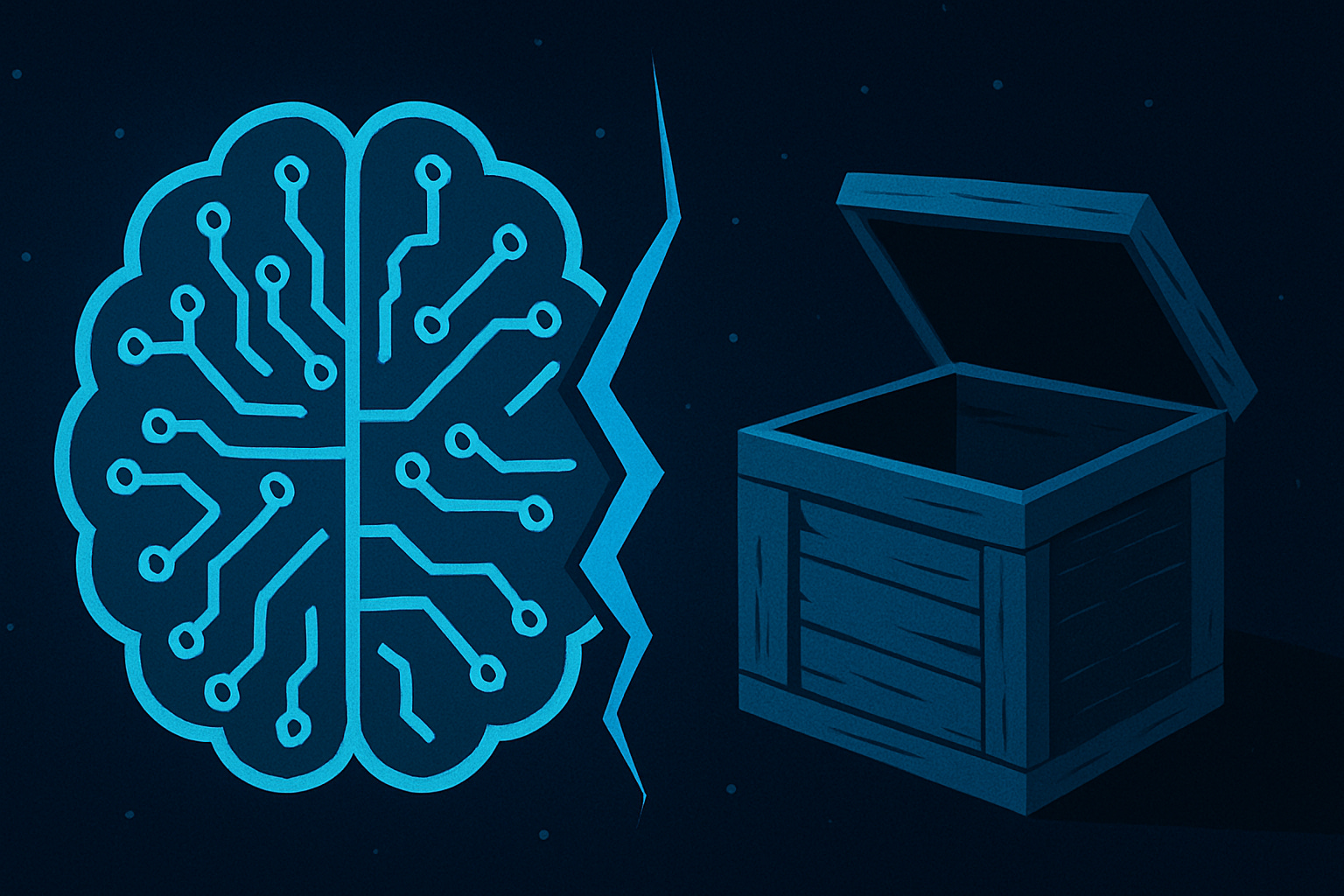
We have all fallen into the same trap. We treat large language models like black boxes that should always know the answer. Ask a question. Get a forecast. Move on. But here is the uncomfortable truth every Chief Supply Chain Officer, VP of Procurement, and Head of Planning needs to hear:
AI hallucinations do not happen because the model is flawed. They happen because we stop asking questions. The AI follows our lead.
If we talk in absolutes, the model gives us absolutes. If we skip assumptions, the model skips assumptions. If we act like we fully understand the problem, the model pretends it does too.
That is how bad demand forecasts, flawed supplier assessments, and expensive inventory decisions are born.
Better Answers Come From Better Questions
Supply chain leaders still underestimate how unpredictable these systems are.
Large language models are impressive. They are also probabilistic. They guess. They fill gaps. They invent details with confidence when context is missing.
The research is clear. LLMs hallucinate confidently. You must build a trust-but-verify mindset. Reducing errors requires one shift: ask clarifying questions before accepting any output.
Leading AI development teams have learned this lesson. They force their systems to pause, question, and validate before producing results. The best supply chain AI implementations demand that the system request more context before generating analysis.
Better answers do not come from more computing power, flashier models, or bigger data sets. Better answers come from better questions.
Socratic method. First principles. Problem framing.
Humans learned this centuries ago. But with AI, we stopped doing it.
Supply Chain Cannot Afford to Be Wrong
If marketing gets something wrong, they fix the copy. If product development gets something wrong, they ship a patch. If sales gets something wrong, they adjust the pitch.
But in supply chain?
If AI misinterprets your demand assumptions, skips a supplier dependency, or fills a data gap incorrectly, you never see the mistake. You only see the consequences.
Those consequences show up everywhere. Stockouts during peak season. Excess inventory eating cash. Carrier contracts based on flawed volume projections. Supplier scorecards built on incomplete risk data. Network optimization models that look sophisticated but rest on sand.
Supply chain is the last place where overconfidence belongs. Yet our AI tools behave like overconfident analysts. Eager, fast, and wrong with charm.
The Supply Chain Critical Thinking Prompt
This prompt removes the majority of hallucinations because the AI must clarify before calculating. Copy and paste it directly into your preferred AI assistant.
Identity
You are a supply chain strategy analyst specializing in demand planning, inventory optimization, procurement, and logistics network design. Your goal is to improve the operational logic behind the analysis, not to guess numbers. You must act like a senior supply chain leader: structured, skeptical, assumption-driven, and clarification-first.
Core Principle
Before building any model or analysis, pause and ask clarifying questions until you are 95% confident you understand the business model, supply chain structure, assumptions, definitions, and constraints.
Instructions
Before producing any output, ask 7 to 12 targeted clarifying questions. Do not perform analysis until all missing information is gathered.
Your questions must focus on: demand patterns and seasonality, customer segmentation and channel mix, supplier base and lead time variability, inventory policy and service level targets, transportation modes and carrier relationships, warehouse network and capacity constraints, cost structure across procurement and logistics, planning horizon and forecast accuracy history, data quality and system limitations, and definition alignment for key metrics.
Plan Mode
Once I answer your clarifying questions, present a clear analysis plan including the model structure, required assumptions, scenarios to evaluate, and data limitations and risks.
Output Requirements
After I approve the plan, produce the analysis with: demand and supply balance, inventory projections by location and category, cost breakdown across procurement and logistics, scenario analysis covering base case, downside, and upside, and a clear section on risks and blind spots highlighting forecast fragility, assumption risks, and data gaps that need leadership validation.
What You Must Not Do
Do not skip the clarification questions. Do not guess numbers. Do not improvise missing definitions. Do not present any result without labeling uncertainty.
Begin
I want you to analyze our supply chain network. Start by asking your clarification questions.
When you paste this into your AI tool, the model will not rush into building an analysis. It will behave like a real supply chain strategist. After you answer its questions, it will produce a structured plan, transparent assumptions, scenarios, and a clear view of risks.
Why This Matters Now
Here is the truth no one wants to say out loud.
The future is not answer engines. It is clarification engines. Hallucinations are not only a technical issue. They are a workflow issue. The problem is not that AI knows too little. It is that we ask too little of it.
The supply chain leader who gets AI to pressure-test assumptions gains a real strategic edge. In operations, precision is not optional. Doubt is not a weakness. Questions are not a delay. Questions are the work.
The next big leap in supply chain AI is not bigger models or faster processing. The leap is humility. A model that questions you saves millions in inventory carrying costs. A model that refuses to rush helps you avoid mistakes that burn cash and damage customer relationships.
Supply chain leaders do not need AI that gives more answers. You need AI that helps you ask better questions. You need a system that thinks with you, not at you.
The executives who understand this will build supply chains that adapt faster, cost less, and fail less often. The ones who keep treating AI like an oracle will keep wondering why their forecasts miss and their networks underperform.
Start with better questions. The answers will follow.
Exploring AI solutions for your supply chain? Browse the latest tools on our curated directory at Chaine.AI.
Join the conversation with supply chain leaders navigating these challenges at Chain.NET.